
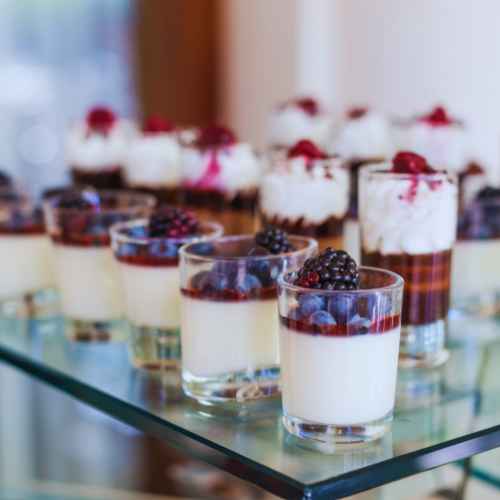
Has something shifted in how your customers think about dessert?
Where they once came in for one indulgent occasion (a birthday celebration, a weekend treat), many are now returning more frequently for something smaller, more intentional. A delicate macaron on a Tuesday afternoon. A single scoop of premium gelato between meetings. A handcrafted chocolate bonbon with their morning coffee. This pattern of “little treat culture,” which we’re seeing across dessert bars, cafés, and foodservice venues alike, reveals something significant about how consumers now view affordable luxury desserts in their daily lives.
This behavioural shift, what the industry calls the “Little Treat Economy,” represents far more than a passing trend. For those of us working in the dessert industry, understanding little treat culture gives us a real competitive advantage. When we recognise what’s driving these purchasing decisions, we can reshape our menus, our pricing, and our operations to meet customers where they are. The payoff? Higher customer frequency, stronger margins, and a business model that’s more resilient in uncertain times.
What Little Treat Culture Actually Represents
It’s tempting to dismiss this as another social media phenomenon, something that will fade as quickly as the last viral food trend. But the evidence suggests something deeper is happening.
At its heart, little treat culture represents a fundamental rethink of what dessert means. Historically, dessert was tied to occasions: celebrations, dining out, and special moments. Today, it’s becoming something different: a functional part of how people manage daily life, regulate their emotions, and mark moments of personal care.
The data reinforces this shift. Research shows that 65% of consumers now prefer smaller portions when it means they don’t have to compromise on taste. Rather than buying a large item that’s “good enough,” customers are actively seeking smaller dessert formats that feel premium. This reflects a broader movement away from “more is better” toward a philosophy of “better is better.”
Here’s the crucial insight: this isn’t about restriction or guilt. It’s about frequency. By making treats smaller and more accessible in price, customers remove the psychological barrier to purchasing. A $15 dessert requires deliberation. A $6 premium treat becomes an instinctive decision. And when those instinctive decisions happen twice a week instead of once a month, everything changes for our businesses.
The Psychology of Permission and Small Dessert Purchasing
Understanding the why behind these choices opens doors to smarter decision-making.
In an increasingly complex world, one that can feel overwhelming, unpredictable, and often beyond our control, people crave something different. They want small, manageable moments of genuine joy. They want to feel agency over their choices. A large dessert can feel heavy, both literally and emotionally. But a single artisan truffle or a bite-sized tartlet? That feels like a deliberate choice, a controlled indulgence, a moment they’ve given themselves.
This psychological driver is particularly strong among younger consumers. Gen Z snacking habits show that 57% of Gen Z purchase a weekly treat, with nearly a third indulging almost daily. But don’t assume this is a Gen Z phenomenon alone. The behaviour is spreading across age groups and demographics.
What matters most is the shift in purchasing mathematics. Traditional customers visit occasionally and spend substantially. But little treat customers visit frequently for smaller amounts. The maths reveal something counterintuitive: multiple small transactions can generate far more annual value than infrequent large ones. The frequency compounds dramatically.
They’re not just buying sugar. They’re buying a moment of respite, a small act of self-care that feels accessible and guilt-free.
Affordable Luxury in Uncertain Times
We can’t talk about this shift without acknowledging the economic reality our customers are navigating.
Economists have long tracked what’s called the “Lipstick Effect”: the observation that during economic uncertainty, people still spend on luxury items, but they shift toward smaller, more affordable options. They might postpone the holiday or the car purchase, but they’ll still invest in something that feels special and achievable.
In the food world, affordable luxury desserts have become the modern “lipstick.”
When major life milestones feel out of reach, when saving for a home, planning a wedding, or securing financial stability feels increasingly difficult, affordable luxury becomes one of the few accessible indulgences. A $9 premium pastry might seem pricey, but as an experience, as a moment of genuine quality in an uncertain world, it’s remarkably accessible.
This is why we see little treat culture thriving alongside cost-of-living pressures. It functions as a recession-resistant form of spending. The small indulgence validates the customer’s hard work without stretching their budget. And when we position our offerings thoughtfully, maintaining premium quality while making them accessible in price and format, we align our business directly with how people are managing their priorities in 2025 and going into 2026.
Shifting Menu Strategy & Dessert Formats
Understanding the psychology is valuable. But what does this actually translate to on your menu board and in your day-to-day operations?
The little treat culture trend asks us to reconsider two things: format and menu architecture. If your menu features only full-sized desserts, you’re effectively screening out the customer seeking smaller, more frequent indulgences.
1. The Power of Dessert Flights and Tasting Boards
When customers want variety without commitment, the “dessert flight” becomes your strongest tool. Mixed dessert plates, offering three to five small portions instead of one large one, have appeared 37% more frequently on menus over the past 18 months. Why? Because they solve a genuine customer problem.
A flight of three mini-gelato scoops or a tasting board of four bite-sized tartlets lets customers explore without the anxiety of choosing wrong. It feels more adventurous, less risky. It also elevates the perceived value: bundling small items creates a premium experience that customers readily pay for.
2. The Economics of Bite-Sized Treats
Small doesn’t mean inexpensive to produce or price. In fact, bite-sized dessert formats often support higher cost-per-gram economics.
Customers resist spending on mediocre full-sized desserts. But they readily invest in a single, exquisitely crafted macaron or a handmade chocolate truffle. This pricing power means we can work with better ingredients.
3. The Add-On Effect: Mini Desserts as Impulse Purchases
Here’s an underutilised opportunity: bite-sized treats are the ultimate add-on sale.
Research shows that customers purchasing small desserts alongside their main purchase, a coffee or a lunch item, spend noticeably more per visit. The small treat becomes irresistible. It’s the evolution of the “coffee and cake” pairing into “coffee and a tiny luxury.”
Train your team to position these items as optional additions. Make them visible at the register. Price them accessibly enough that they feel like a low-commitment choice. The margins on frequency matter more than the margins on individual items.
Positioning for the Future: Building Your Little Treat Culture Strategy
The little treat culture economy isn’t a signal to abandon your full-sized offerings. There will always be customers seeking the celebratory slice or the shared dessert.
But it is a signal to diversify your approach. To ask yourself: Do I have something for the customer who just wants a moment of joy on a Tuesday afternoon? Can I offer an accessible entry point that builds frequency?
When we embrace smaller formats intentionally, not as an afterthought, but as a strategic part of our menu, we’re not just selling less food. We’re offering permission. We’re giving customers a structured way to treat themselves regularly, transforming our venue from a special destination into part of their daily rhythm.
And in an economy where customers are cautious with larger purchases but hungry for small moments of quality, that shift might be the most valuable change we make.
Explore our range of dessert toppings and beyond to find the high-quality textures and flavours that will make your little treat menu unforgettable.
This article was reproduced on this site with permission from operafoods.com.au the “Wholesale Café Suppliers”.
See original article:- Little Treat Culture: The Economy of Small Desserts
The post Little Treat Culture: The Economy of Small Desserts appeared first on The Lolly Shop.